


| ||
General Industrial
| ||
|
||

|
||
|
| |
|
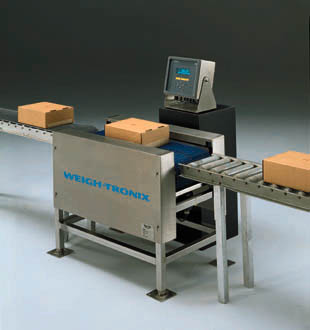
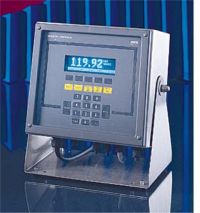
Solving Application Problems with the WI-130/1310 Many people have the impression that the WI-130/1310 indicator is only useful for very sophisticated, complex applications, such as batching or process control. In fact, the WI-130/1310 fits into many different application scenarios, from the very simple to the most complex. The key benefit of the WI-130/1310 is it’s powerful adaptability to diverse operating situations, no matter what their level of complexity. All weighing operations, no matter how simple, involve collecting data. Even a simple shipping or receiving scale, or a simple bench scale, collects data that is used or passed on in some form or fashion. Behind every scale application is a problem that needs to be solved. The problem may be very simple, but it still exists in every application where a scale is truly needed. And the problem always revolves around the collection and manipulation of data. Solving application problems involves a thorough analysis of the customer’s perceived need. This requires asking questions about all aspects of that need, looking upstream and downstream from the proposed scale location to see what really happens in the operation, searching for ways to solve the problem in the simplest possible way, and determining what information the customer would like to derive and how that information is to be captured and stored. Often, the customer will not realize the power or possibilities you can offer for information collection or process control. One must find out what the real problem is, and go about finding the proper solution. It is then important to convince the customer that you and your company have the means and the resources to provide the most elegant, efficient, and cost effective answer to the problem he faces. In many cases, the Weigh-Tronix WI-130/1310 can provide the justifiable solution to the problem.
What to Expect When Inquiring About a Software Quote When making an inquiry about a WI-130/1310 or PC quote, we will ascertain as much information as possible about the proposed application. We need to know what the customer would like the system to do for them. This could involve sending a fax or email to us detailing the perceived operation and physical components involved, including sequence of operation, equipment layout, label designs, reports required, data to be used, etc. We will review the information, decide what the system will actually need, and develop a quote. The quote will include an overview of the application, a sequence of operations, what items are to be provided by the dealer, what items are to be provided by TSW Automation, a list price, dealer terms, and an order form. The quote is then faxed to your office for review by you and your customer. If changes to the application are needed after this review, a revised quote may be sent. Upon receiving final approval by the customer, the order form is faxed to our office.
When Should You Consider a PC for Data Storage/Reports? When designing a program for the WI-130/1310, the programmer must determine what data, if any, is to be stored. That data is then categorized into either numeric or alpha-numeric to determine where to allocate memory storage and how much memory is required. Many programs can use the standard RAM (Random Access Memory) installed in the unit. The standard RAM provides about 1000 numeric and 500 alpha-numeric locations. Other programs require more memory locations, which can be handled by the 262K RAM Expanded Memory, which provides approximately 8000 numeric and 4000 alpha-numeric locations. Finally, some programs require the 1 MEG Expanded Memory card. The 1 MEG Memory card provides about 73,000 numeric and 36,000 alpha-numeric locations. Some WI-130/1310 systems actually begin as a stand-alone system. Basic reports can be printed, showing each weight transaction, and then the memory is cleared to start fresh the next day. Once a customer realizes the potential to manipulate the transaction data by station, by part, by operator, even by week or month, the need for a PC based system becomes a reality. The WI-130/1310 is great for storage and printing of databases such as parts, vehicles, customers, daily transactions, and in some cases weekly transactions. When the needs of a customer turn to complex sorting and display of transaction data, a PC based system is a perfect complement to the WI-130/1310.
Using Label Printers with the WI-130/1310 Which type of label printer to use depends on the application. Several factors to consider when choosing a label printer include: speed, volume, flexibility, quality and type of printing. Two main methods of printing include Non-Impact and Impact. Four popular types of Non-Impact printers include: Direct Thermal, Thermal Transfer, Laser, and Ink Jet. Direct Thermal printers produce an image by heating a print head. When the print head contacts the thermal paper, the paper is discolored which creates the image. Thermal Transfer printers use a heated print head and a film ribbon. Once the ink from the ribbon is transferred to the paper, the ribbons can only be used once. Laser printers use a laser to transfer an image to a rotating cylinder. Toner is attracted to the image and then transferred to the paper. The toner is fused to the paper by heat or pressure. Ink jet printers spray dots of ink onto the surface of the paper. The most popular impact printer is probably the Dot Matrix printer. Pins or hammers strike an ink ribbon that produces small dots of ink on the paper.
| ||


© 2025 - TSW Automation, Inc. tswa.com | ||